
Two days at ULTL VII with shippers, logistics service providers, and carriers left us with one clear message: the easiest company to work with wins the freight.
Not the biggest network. Not the flashiest portal. The one that makes quoting, booking and billing feel effortless.
Here are four ULTL VII lessons we brought home, and what they mean for anyone who ships, brokers, or hauls freight.
1. Meet freight people where they already work
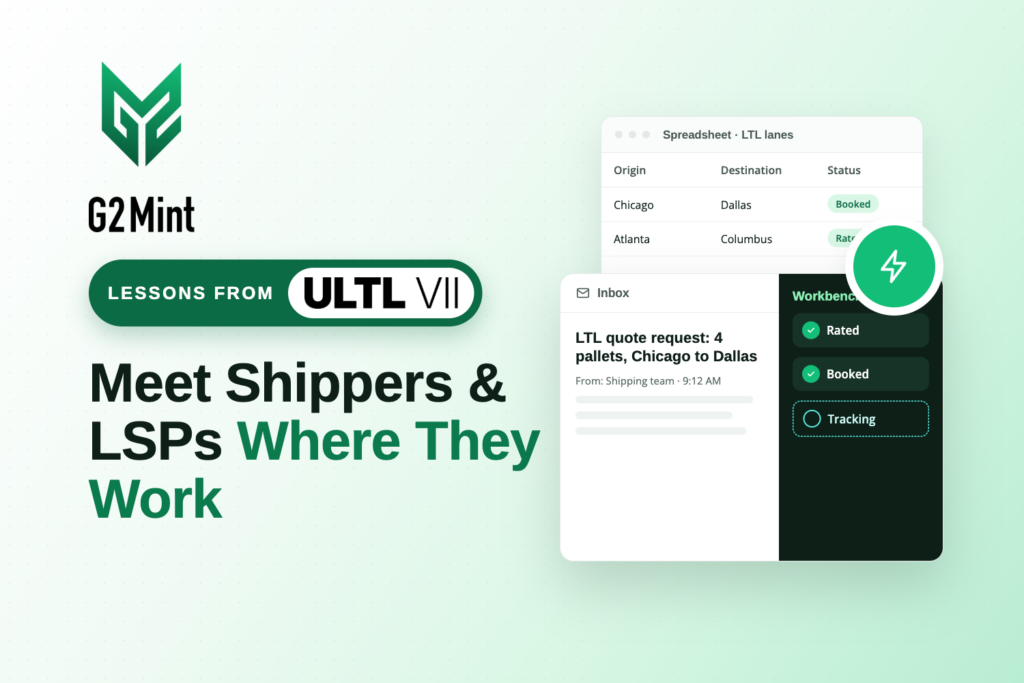
Freight work lives in email and spreadsheets. That’s where quote requests land, rates get compared and bookings get tracked.
Yet most freight technology asks shippers & LSPs to leave that world: another login, another screen, the same details typed twice.
Shippers also rarely work with just one provider. One estimate shared at the event put a single carrier’s share at only 15 to 20 percent of a shipper’s freight. Multiple partners with multiple portals isn’t a solution. It’s more work.
The lesson: make it easy to engage and transact. Let shippers quote, book and track from the tools they already use.
2. Fast, accurate pricing wins the load
“Send us 90 days of history and we’ll get back to you” loses the load before the rate arrives. Shippers expect a clear price now, with no surprise charges after delivery.
Speed alone isn’t enough, though. The quote has to reflect real rates, agreements and accessorials. Otherwise the margin leaks out later through disputes and rebills.
The lesson: turn your rate and agreement logic into instant, trustworthy quotes. That protects the shipper’s budget and your margin.
3. Automate the busywork, not the mess
One missing reference number, vague commodity or wrong zip code on a bill of lading can hold up payment for weeks. Then people spend hours chasing emails to fix a shipment that should have been routine.
The same goes for turning emails into quotes, auditing carrier invoices and moving data between systems. It’s 2026. Nobody should be paid to copy and paste freight data.
Going digital doesn’t solve this on its own. It just moves bad data faster.
The fix is to catch errors when the shipment is created, then let automation handle the repetitive checks, updates and follow-ups.
The lesson: good automation expands your team’s capacity. More freight, same team, fewer fires.
4. Connect first, then add AI
AI was everywhere at ULTL VII, and so was a healthy dose of realism. A chatbot added to disconnected systems just gives wrong answers faster.
The order matters: connect your carriers and systems, get visibility, act on what you see, then automate. AI that can actually do the work needs connected, API-first infrastructure underneath it.
The lesson: AI in freight needs more than a copilot. It needs a foundation built to execute.
What this means for you
- Choose partners who fit your workflow, not the other way around.
- Clean data and fast answers mean fewer disputes and more repeat freight.
How G2Mint puts this into practice
- G2Mint Workbench lets teams rate, build and book shipments from email and spreadsheets.
- Our Freight Automation Engine turns rates and agreements into fast, accurate quotes, inside your current system with Boost or built into Command, our AI-native TMS.
- Miles, our AI freight assistant, handles the repetitive work so your team can focus on customers.
FAQs
What is ULTL?
ULTL is an LTL industry event that brings carriers, LSPs, shippers, and technology providers together for open conversations. ULTL VII took place in November 2026.
How can LTL carriers make it easier for shippers to do business?
Offer fast, accurate quotes. Let shippers book and track from tools they already use. Catch data errors before they reach the invoice.
Does AI replace freight teams?
No. Used well, AI takes on repetitive tasks so the same team can handle more freight.
Make freight easier for your shippers
See how G2Mint Workbench lets your team quote and book freight right from the inbox –
https://g2mint.com/#workbench